Why slow cookers remain a practical response to high energy costs
As energy prices continue to place pressure on household budgets, there has been renewed public attention on everyday ways to reduce energy use without compromising on nutrition or wellbeing. Cheaper, lower‑energy cooking methods are back in the spotlight, with slow cookers frequently cited as one of the most accessible and cost‑effective options.
Slow cookers have also returned to the mainstream cooking conversation, with well‑known chefs such as Jamie Oliver, Poppy O’Toole and others continuing to promote slow‑cooking as a practical, affordable approach suited to tighter household budgets and rising energy costs.
A practical response to long‑term affordability
This attention reflects a wider national shift. With fewer one‑off support payments available and a greater focus on long‑term affordability, households are increasingly being encouraged to make practical changes that reduce ongoing costs. Slow cookers fit squarely within this conversation. They use significantly less electricity than conventional ovens and allow people to prepare warm, nutritious meals using lower‑cost ingredients.
In rural communities, the relevance is particularly clear. Higher living costs, reliance on electric cooking and limited access to advice or demonstrations can all act as barriers to change. What we have seen consistently is that people are far more likely to adopt new cooking methods when they can see them in action, ask questions and share experiences with others.
A practical response to long‑term affordability
This is why slow cooker demonstrations remain an important part of our cost‑of‑living and wellbeing work. Demonstrations provide more than information; they build confidence. For many people, especially those cooking for one or managing fluctuating energy bills, learning how to use a slow cooker in a supportive, informal setting makes the difference between curiosity and action.
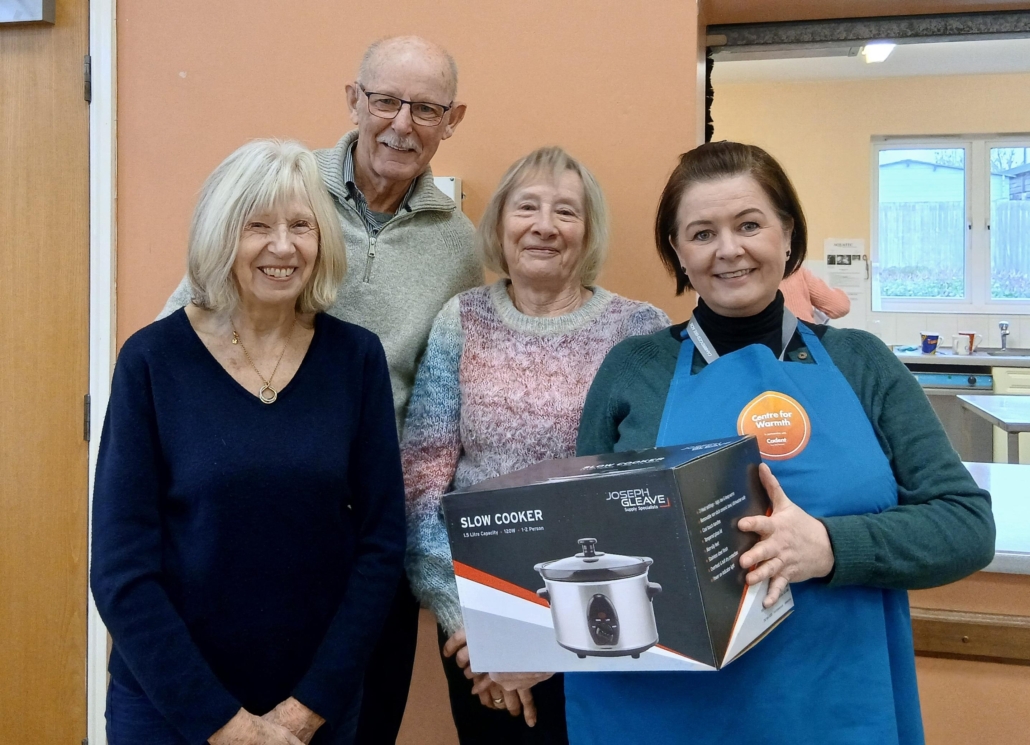
Alongside demonstrations, Cambridgeshire ACRE has access to a large supply of slow cookers, provided by our funder, Cadent, that can be given away free of charge to households who would otherwise struggle to afford them. Removing the upfront cost helps ensure that lower‑energy cooking is a realistic option, not just a recommendation.
We are keen to work with local organisations, groups and venues that are already supporting people facing financial pressure. If you run a community hub, village hall or local group and think slow cooker demonstrations or giveaways could benefit the people you work with, we would be very happy to discuss how we might work together. Our approach is flexible and designed to complement existing local activity rather than duplicate it.
As national conversations continue to focus on household resilience and long‑term affordability, practical, community‑led initiatives such as this play a valuable supporting role. Small changes, when made accessible and locally delivered, can help people manage rising costs while maintaining independence and dignity.

