Community hubs, digital skills and staying connected
Across the UK, access to public services is becoming steadily more digital. In response, the government’s Digital Inclusion Action Plan – the first national strategy of its kind for a decade – aims to ensure everyone can get online safely and with confidence, with a strong emphasis on partnership working and local delivery.
The plan rightly recognises that digital exclusion is rarely just about connectivity. Older people, those on low incomes and people living in rural areas are more likely to face overlapping barriers, including lack of confidence, limited access to suitable devices, unreliable broadband and concerns about scams.
Where national policy meets everyday life
Our network of community hubs are well placed within this national picture, precisely because they operate at the point where policy meets everyday life. Through the hubs we facilitate across East Cambridgeshire, Fenland and South Cambridgeshire we see first‑hand that digital support works best when it is informal, relational and anchored in trust.
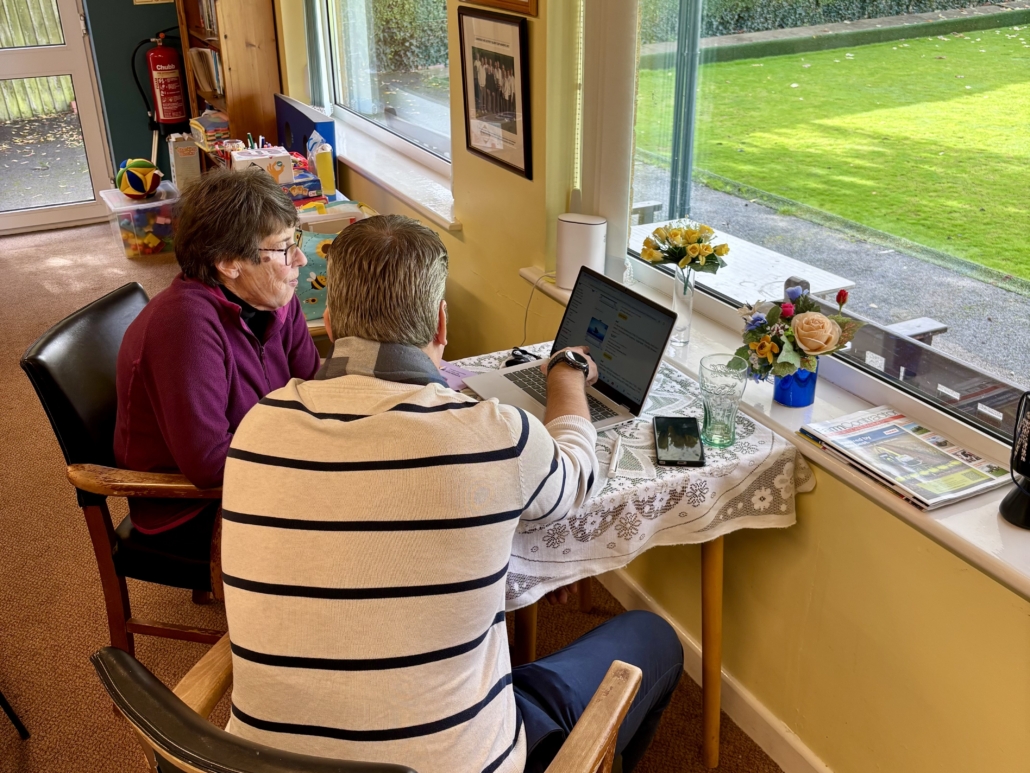
People do not arrive at a hub to “learn digital skills” in the abstract. They want help with something specific: booking a GP appointment, managing a utility account, accessing benefits information or staying in touch with family. Having someone alongside them, in a familiar and non‑judgemental setting, makes these tasks feel achievable.
Nationally, the Digital Inclusion Action Plan explicitly highlights the need for trusted local help and for services to retain offline routes so that people are not excluded while they build confidence online. This is particularly important for rural areas. Transport barriers, older populations and the closure of physical service points mean that an online‑only approach can quickly deepen isolation.
A hybrid approach to digital inclusion
Community hubs embody this hybrid approach. They support people who want to get online, while also recognising that some residents either cannot or choose not to use digital services. For these individuals, face‑to‑face contact, paper forms and phone calls remain essential. Effective digital inclusion does not mean forcing everyone online; it means making sure nobody is overlooked.
Over the past 12 months, thanks to funding from Connecting Cambridgeshire, we have been able to equip 10 of our Community Hubs to become digital hubs – including helping three install broadband connectivity. 15 volunteers have trained as digital champions and between them them have supported 90 people with digital tasks and delivered 40 hours of digital support. As one hub attendee helped by a digital champion told us:
“I was quite anxious about using my phone properly and kept putting things off because I did not want to make a mistake. Having someone patient who could show me step by step really helped. It was done over a cup of tea, at my pace, and I came away feeling more confident to try things on my own rather than avoiding them.”
In conclusion
The national plan has already supported over a million people to get connected, largely through partnerships with local organisations. Community hubs form part of that wider ecology, translating national ambition into practical, humane support.
As public services continue to move online, the role of community hubs is likely to become even more important. They are not simply venues for activities, but trusted intermediaries – helping people navigate change at their own pace, and ensuring that rural communities remain connected as systems evolve.

