Behind every rural affordable housing scheme is a conversation | Rural Housing Week
Before a single affordable home is built, there are conversations.
Conversations with parish councils. Conversations with residents. Conversations with landowners, housing associations and local authorities.
Behind every successful rural affordable housing scheme is a long process of listening, partnership and problem solving. During Rural Housing Week, we’re shining a light on the people who help make those conversations happen.
The Rural Housing Enabler role is unique. Independent of developers and housing associations, the team works alongside communities to understand local need, build trust and help villages make informed decisions about their future.
At Cambridgeshire ACRE, our Rural Housing Enabler team works quietly behind the scenes – in village halls, on muddy field visits and in conversations with residents – helping communities navigate complex decisions about homes, land and future growth. Their role is practical, but it is also deeply human.
A role rooted in community relationships
The core of rural housing work is not just about delivering homes. It is about understanding what local people need and supporting communities to find solutions that work for them.
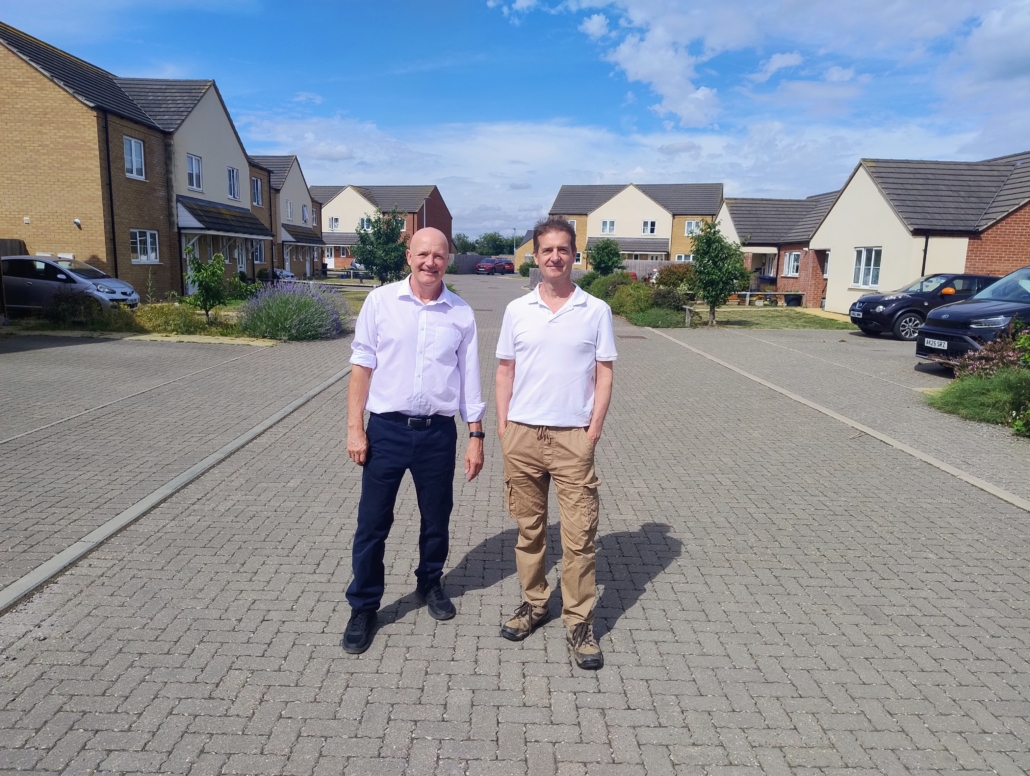
Both Gary Roffey and Russell Moore describe their roles in similar terms: bringing together parish councils, housing associations and residents to identify and deliver homes that reflect local need.
The team say that their work starts with listening. They work directly with parish councils, explain how the process works and lead housing needs surveys to understand demand. Their work combines that engagement with problem-solving – analysing survey data, visiting potential sites and helping to unblock projects when they stall.
Both are focused on helping villages remain sustainable and inclusive places to live.
Why this work matters
The motivation behind this work is closely tied to the realities faced by rural communities.
Ask Gary what motivates him and he’ll talk about the people forced to leave the villages they love because they cannot afford to stay.
Ask Russell and he’ll describe the satisfaction of helping communities find practical solutions where housing options are limited.
Both are realistic about the challenges. Projects can be complex and slow-moving, requiring persistence over time. But the long-term benefit – homes that meet local need – makes that effort worthwhile.
The human moments that stay with you
When asked what stays with them, both team members point to direct contact with residents.
For Gary, it is hearing from people who have moved into new affordable homes and the difference this has made to their lives. For Russell, it is often earlier in the process, when comments from housing needs surveys reveal the difficulties people face without access to suitable housing.
Taken together, these perspectives capture the full arc of rural housing delivery: from understanding need, through to seeing the eventual benefit of new homes.
Those moments are a reminder that behind every housing scheme is a person whose life may be changed by having somewhere affordable to call home.
Finding the right place
A key part of the team’s role is identifying sites that are both realistic and supported by the community.
Russell describes this as a blend of technical and local insight – using mapping tools alongside time spent walking villages, understanding place and listening to parish views. This reflects a broader principle: solutions are more likely to succeed when they are grounded in local knowledge as well as technical evidence.
From conversation to homes: a local example
In Eltisley, these conversations led to the development of West Farm Close – a small scheme of nine homes shaped directly by local need. A housing needs survey identified ten households requiring affordable housing, creating a clear evidence base for action. Working with the parish council, a housing association and local landowners, a site on the edge of the village was brought forward, with land made available specifically to support the scheme.
Only nine homes were built at West Farm Close, but for the people who now live there, the impact has been life changing. The homes offer a mix of affordable rent and shared ownership, alongside practical benefits such as air source heat pumps and high levels of insulation, helping to keep energy costs down for residents. For those who have moved in, the outcome is simple: the ability to stay in the community they know, rather than being priced out.
Why rural delivery is different
Stories like this can make delivery seem straightforward. In practice, rural housing is often constrained less by demand than by the system around it.
Suitable land is limited, with many schemes relying on rural exception sites that fall outside normal development boundaries. Progress depends on landowner willingness, the involvement of housing associations and alignment with parish councils and local authorities. Small schemes must also remain viable despite rising costs and, in some cases, reduced grant funding.
This means delivery is typically incremental and negotiated rather than large-scale and programme-driven. Evidence from our work consistently shows that the key barriers are structural – access to land, funding and delivery partners – rather than a lack of local need.
Beyond the day job
Outside work, both Gary and Russell point to simple ways of switching off – walking, exercising, or spending time outdoors. There are lighter moments too: Gary is an enthusiastic reader and member of multiple book clubs, while Russell once appeared as an extra in a Bollywood film!
These details matter. They remind us that behind policy discussions and housing schemes are individuals bringing their own experiences, interests and personalities.
Supporting communities to shape their future
A consistent message from both team members is that rural housing works best when communities are actively involved.
At its heart, this approach challenges a common assumption – that housing development happens to communities rather than with them. In practice, the work is about facilitation, evidence and dialogue as much as delivery.
Looking ahead
Rural Housing Week often focuses on the scale of the challenge. Rural communities across Cambridgeshire continue to face significant pressures around affordability, availability and sustainability.
But the work of the Rural Housing Enabler team shows another side of the story: the steady, often unseen effort to work alongside communities to address those challenges in a practical way.
The homes that people see are only one part of the story.
Behind every rural affordable housing scheme are years of conversations, careful listening and partnership working. That work is rarely visible, but it is what enables communities to shape their own future.
And perhaps that is the real story of Rural Housing Week.

