A door that is always open: community hubs as the front door to local support
Key takeaways from this article:
-
Community hubs are the front door to local support
-
They work because volunteers create trust and belonging
-
They stay viable only with partner support: funding, in-kind, volunteer time, sessions
Community hubs are often described as warm spaces, but that can sound smaller than it is. What’s really happening is simpler and more powerful: a door that is open week after week for company and practical support.
People come for warmth and company, then ask about something else
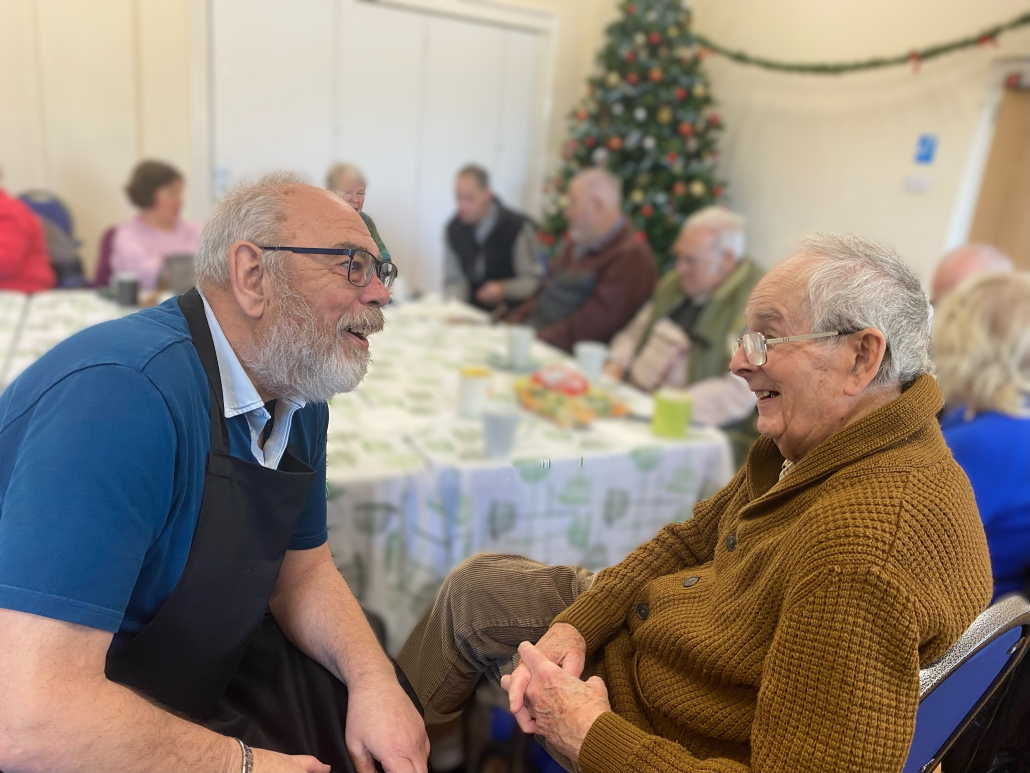
When you walk into a hub, you rarely hear someone announce, “I need help.” What you see is people settling in, with a familiar welcome, a hot drink and a few minutes of normality.
Then the quieter conversations begin.
Because behind the tea and biscuits, the chatter and the feeling of inclusion, people often turn up to hubs for warmth and company. Then, once they feel safe, they quietly ask about something else.
It might be a practical ask. Completing a form that feels impossible, a worry about a phone call they do not feel confident making, or it might be something harder to name, like loneliness and the slow erosion of confidence.
The pattern is remarkably consistent: connection first, support second. That is what makes hubs such an effective front door. They do not ask people to be ready, articulate or organised. They simply offer a place to start.
Our research on our community hubs backs up this view. People do not attend once and then disappear. Most come regularly – often weekly – because it gives them a reason to leave the house or it gives them a regular sense of routine. 9 in 10 visit weekly or go three weeks out of four, while some tell us that without the hub they would not go out at all, another described the hub as a “lifeline” for them.
Community hubs exist within our rural communities and attract people young and old. Many of the attendees live alone, are widowed, have a long-term health condition, or are on a low income. These are exactly the circumstances that can make it harder to seek help early. The presence of the hub makes it easier because it is familiar and you always met with a friendly face.
For many people, the hub is where support becomes possible. Village Agents and volunteers turn a conversation into a next step
Village Agents are a calm, trusted presence in the places people already go. You do not need to book an appointment, travel to an unfamiliar building, or explain your story from scratch. It all starts with a chat.
According to our data, three quarters of respondents said they had received direct help from the Village Agent linked to their hub – and that support was extremely well-received. 81% of hub attendees said they would not know, or were not sure, where to get help without the Village Agent, bringing into stark focus the difference between coping alone and knowing where to turn.
The support is practical and shaped by people’s needs. Village Agents can help with a range of different issues including:
- Benefits and entitlements, such as Blue Badge applications, Attendance Allowance and Pension Credit
- Cost of living support and home safety, including energy advice, Priority Services Register sign-ups, and practical items such as heated throws and carbon monoxide alarms
- Health and wellbeing signposting, including dementia services, bereavement support, and mental health support
- Family and carer support, including autism-related support via Pinpoint
- Digital inclusion support, including setting up Digital Champions and helping people with online tasks
 Just as importantly, Village Agents can refer and connect people into wider support, so they do not feel stuck or bounced between services. This includes links into social prescribing and specialist organisations, depending on the need.
Our hubs only work because the local community chooses to make them work. Without volunteers, they would not survive.
They do the practical jobs that keep the doors open: setting up the room, making teas, coffees and rounds of toast, welcoming newcomers and gently noticing when someone seems quieter than usual. They also create an atmosphere that makes people feel safe enough to come back time and time again.
Our volunteer survey shows how community-led this model really is. The average hub relies on six volunteers with 84% living locally. That is a strength because it keeps things local and personal, but it can also make hubs vulnerable if only a few people are able to keep them operational.
Volunteers don’t just give, they receive too. They express joy at the sight of people settling in and witnessing the friendships that form across the table. As one of our volunteers described there’s no better feeling than seeing people “leave a foot taller.”
Partner support that turns a hub into a front door
Hubs do not exist in isolation. At their best, they connect people to a wider network of support in a way that feels safe and accessible.
Village Agents and volunteers often bring in outside organisations to offer talks and sessions based on what people are asking about. That might include scam awareness and fraud prevention, fire safety sessions, health support including immunisations, demonstrations on how to use a defibrillator, or a digital champion giving help on how to use mobile phones, tablets or laptops.
 This is where partners can have real impact. When a trusted organisation shows up in a hub, it instantly removes barriers. People are more likely to listen, ask questions and accept support. It is also a practical way to reach rural residents who may not otherwise engage with services.
Our hubs have strengthened their links by partnering with business and services in their local community. This community-minded support includes donations from the likes of Tesco and the Co-op, and sessions from the likes of Cambridgeshire Fire and Rescue Service.
Warm Welcome Week in action: small practical help with significant impact
Warm Welcome Week in January helped bring the story of community hubs into focus. It shone a light not only on what these spaces offer in winter, but the support the hubs provide all year round.
This year Tesco donated a box of hand warmers which were shared across the hubs. Last year electric blankets were provided to ensure someone can stay warm, including to an individual caring for a family member with an incurable illness. While a simple item, at that moment it was a comfort, providing relief, and a welcome reminder of the community looking out for them.
Why continued support matters
All of this only works if hubs can keep their doors open. And when they are, it’s the people behind the friendly welcome, the practical support and the partnership that makes them thrive.
Volunteers have told us that they are concerned about the sustainability of the hubs, especially around funding and resources. Some highlighted venue hire costs and the need for financial support to continue and build on what they do. Others want to offer more, from improving facilities to expanding activities, and benefitting more people who may still be isolated and need their support.
From the attendee perspective, the stakes are just as clear. Without the hub, many would stay at home, often alone. Some linked that directly to poorer mental health, increased anxiety and loss of routine.
Once again, it spells out that community hubs are not just a nice idea, but a preventative support system that strengthens wellbeing and community resilience.
As one of our Village Agents describes, “It’s more than a cuppa and a warm space. It’s connecting people and those who really value human contact.”
How you can support community hubs
It’s hard not to recognise the value of these spaces and there are ways to help.
If you are a funder, local business or organisation that wants to strengthen rural communities, partnering with a hub is a practical, high-impact way to support what works. That support might mean funding, in-kind donations, volunteer time or offering trusted sessions that people can access in a familiar place.
If you provide a service that could benefit rural residents, consider bringing advice sessions or practical talks into a hub. These spaces already have trust, regular attendance and a welcoming atmosphere that makes it easier for people to ask for help.
And if you feel volunteering is for you, we will never turn the offer to support away.
If you can support community hubs through funding, partnership or volunteering, please step forward. We would love to work with you and keep the doors open.

