Staff blog: Preparing for a future where no one faces cancer alone: reflections from Fenland
Cambridgeshire ACRE’s Rural Health and Wellbeing Manager, Caitlin Evans
In this blog, Cambridgeshire ACRE’s Caitlin Evans, Rural Health and Wellbeing Manager, who leads our Fenland-based cancer support project, reflects on a new report on cancer prevalance published by Macmillan Cancer Support and how it has renewed her determination to help make a difference for people affected by cancer in rural Fenland.
When the latest cancer prevalence report from Macmillan Cancer Support and Scottish Widows landed in my inbox, I felt what many people working in frontline cancer support will have felt: concern, urgency and, above all, a renewed determination to make sure our communities are ready for what lies ahead.
By 2045, the number of people living with and beyond cancer in the UK is expected to rise by 58%, reaching 5.4 million people. That’s not an abstract statistic – that’s our neighbours, our friends, our families. In Fenland, where cancer support is already stretched and travelling for appointments can involve long and difficult journeys, these projections hit even harder. They reinforce what I see every day: local, personalised support isn’t optional. It’s essential.
The reality behind the numbers
Cancer prevalence is rising for many reasons – improved detection, better survival rates, an ageing population – but the experience behind each diagnosis remains deeply human. People are juggling treatment with everyday life, making impossible decisions about work and finances, or trying to rebuild their lives long after treatment ends. Many already face long waits, fragmented care and exhausting travel for appointments. If that’s our current reality, we must ask ourselves how rural areas like Fenland will cope as numbers rise further.
That’s where our work at Cambridgeshire ACRE, in partnership with Macmillan, becomes even more important.
What local personalised support looks like
Our Macmillan Village Agents are delivering one‑to‑one, person‑centred cancer support in the places where people live. I’m proud to work alongside them because I see the impact of their approach every single week. They aren’t just offering information or helping with practical tasks – they’re turning up at someone’s door at a moment when everything feels overwhelming.
They provide home visits for those who can’t travel easily.
They offer emotional support, sometimes simply sitting and listening when words won’t come.
They help people navigate benefits, Blue Badge applications, practical challenges and the myriad decisions that follow a diagnosis.
One of our Agents summed it up beautifully:
“No two days are ever the same and that’s why I love this work. Supporting people at the toughest time in their lives – sometimes practically, sometimes emotionally – can make all the difference. Sometimes just being a friendly face is enough.”
Every time I hear this, it reminds me why community‑based support must be preserved and strengthened.
The power of coming together
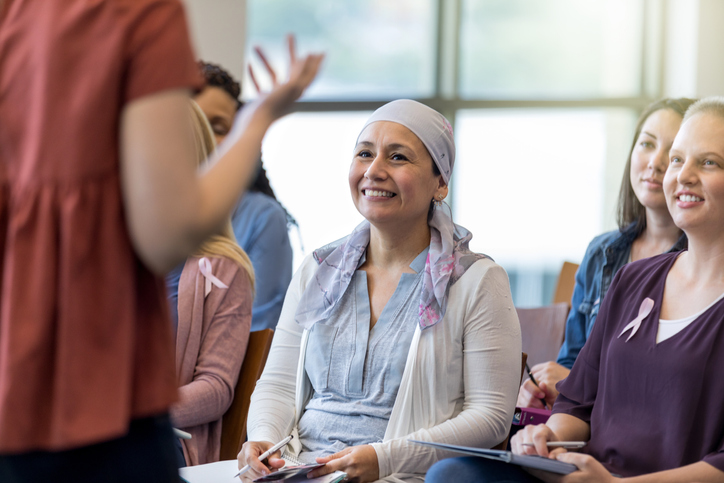
Alongside our one‑to‑one support, our Talk, Care & Share cancer support groups have become a lifeline for people who need space to talk with others who truly understand. One participant recently told us:
“As far as I’m concerned this group is a lifesaver. Cancer is a really lonely disease. Meeting and talking to others going through it has helped me more than anything else.”
It’s hard to think of a clearer reminder of why community spaces matter – and why they will matter even more in the future.
Preparing for what comes next
The report makes it clear that we’re entering an era when far more people will live long‑term with cancer as a managed condition. NHS services will continue to feel the pressure, and increasingly, vital elements of support will need to happen within communities. Rural areas must not be left behind.
Our vision at Cambridgeshire ACRE is simple but uncompromising:
- No one in Fenland should face cancer alone.
- Support must be accessible, personal and compassionate.
- Rural communities deserve the same level of care as anywhere else in the UK.
Achieving this isn’t something any single organisation can do. It will take hospitals, GP surgeries, the voluntary sector and communities working side by side. But with the right collaboration, we can build a future where people receive the help they need early, locally and consistently.
As someone working closely with Fenland residents every day through the Community Cancer Champion project, I know how much this matters. The projections for 2045 aren’t just a warning – they’re a call to act now, together, to make sure our communities are ready for what’s coming.

