
The rural housing crisis isn’t always where you think it is | Staff Blog
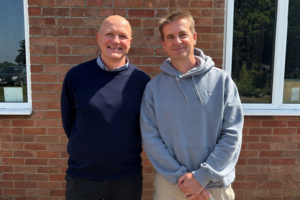
In this blog, Cambridgeshire ACRE’s Rural Housing Enablers, Gary Roffey and Russell Moore discuss how rural housing need in Cambridgeshire is often hidden and look beyond the statistics at who is struggling to find an affordable home, why local evidence matters and how small rural housing developments can make a lasting difference.
When we talk about the housing crisis, the conversation often focuses on cities, rising rents and the difficulties facing first-time buyers. But what about the villages where housing need is less visible, yet just as real?
A recent Inside Housing article exploring Europe’s new Affordable Housing Act made an important point: housing pressures vary enormously between places, and the solutions need to reflect local circumstances.
It’s something we see every day in our work across rural Cambridgeshire.
The hidden housing crisis in our villages
In July, Cambridgeshire ACRE published Beyond the Numbers: Rural Housing Need Across Cambridgeshire, bringing together findings from eight local housing needs surveys involving more than 900 households.
The research identified a need for 175 affordable homes. We know that historically less affordable homes have been built in rural villages and where some homes were built many have been lost to ‘Right to buy’. But behind the figures are people whose circumstances rarely make the headlines.
Young adults who have grown up in a village but cannot afford to live there. Families who need another bedroom but have nowhere suitable to move. Older residents who would happily downsize, freeing up a larger family home, if only there were smaller, accessible properties available locally.
And perhaps most hidden of all are the people who have already left. They may still have strong family, work or community connections to the village, but simply couldn’t find a suitable home they could afford locally.
Whilst recently speaking to local residents of a Cambridgeshire village where we are undertaking a housing needs survey, several spoke of people they knew personally who had moved away from the village to other places and now wished to return but are unable to because of the prohibitive rents and house prices.
These aren’t always people who appear on housing waiting lists. Some are living with parents, renting privately or making do with unsuitable accommodation. Others have simply stopped expecting that living in their village will be an option. Their housing need can easily go unnoticed.
Why local evidence matters
One of the lessons emerging from Europe’s approach is the importance of understanding housing pressures at a local level.
We couldn’t agree more.
Two neighbouring villages can have completely different housing needs. One might need affordable rented homes for young families, while another needs smaller properties for older residents. A development that works brilliantly in one community might be entirely wrong for another.
That’s why our work begins with listening.
Through housing needs surveys, conversations with parish councils and engagement with residents, we help communities understand what housing is actually needed, rather than making assumptions.
And importantly, this isn’t about building houses for the sake of meeting targets. It’s about asking the right questions by moving the conversation away from “how many homes?” towards “what homes, for whom, and where?”
Small developments can make a big difference
In rural communities, even a handful of affordable homes can have a lasting impact.
They can help a young family remain close to grandparents, enable someone to continue working locally or allow an older resident to stay connected to the community they have known for decades.
And, over time, retaining a mix of people and age groups can help support the schools, shops, pubs, voluntary groups and other services that make rural communities thrive.
Of course, delivering these homes isn’t always straightforward. Finding suitable land, securing funding, navigating planning requirements and building community confidence all take time.
But we’ve seen how much can be achieved when parish councils, landowners, housing associations and local authorities work together.
In our discussions with local communities we highlight how planning regulations can be used to help deliver affordable housing in villages and to ensure any homes built are protected for people who have a strong connection with the Parish.
This approach enabled the delivery of 9 new high-quality affordable homes in Eltisley and 14 in Fen Drayton (South Cambridgeshire villages) last year. These homes were the direct response to local housing needs studies carried out by Cambridgeshire ACRE and provided much needed housing for local people.
The housing crisis won’t be solved through national targets alone. It also needs local knowledge, community involvement and a willingness to recognise that rural housing needs are different.
Because sometimes, the difference between a village surviving and thriving is simply making sure local people have somewhere they can afford to call home.
Find out more about Cambridgeshire ACRE’s Rural Housing Enabling work and read our report, Beyond the Numbers: Rural Housing Need Across Cambridgeshire.

