Cancer inequality in Fenland: Lessons from the community

In this article, Hayley Neal, Chief Executive, blogs about a recent project event she attended.
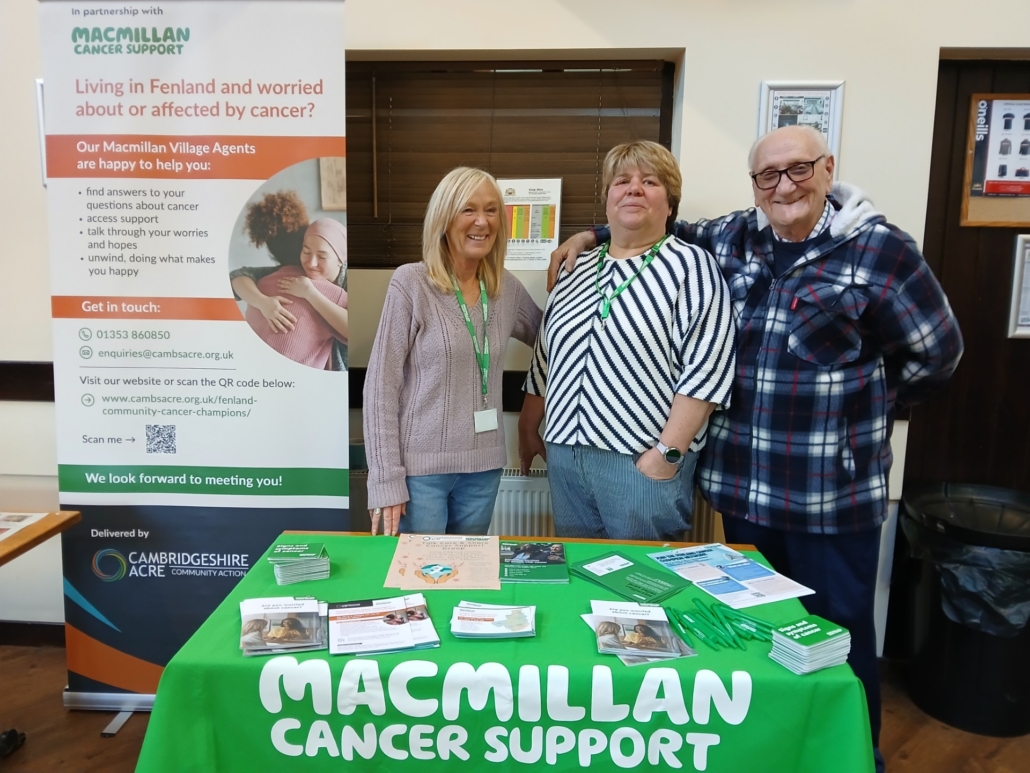
As Chief Executive, it is easy to spend too much time at a desk reading reports, budgets and strategy papers. All of that matters, but recently I wanted to step back into the reality of what cancer inequality looks like in our communities. So I joined our Macmillan Village Agents in Fenland to see their work first hand.
What I saw confirmed something I have believed for a long time: tackling cancer inequality is not only about hospitals and treatment. It is also about trust, confidence, practical support and whether help is designed around people’s real lives.
National evidence is stark. Cancer Research UK’s latest analysis found cancer mortality rates are almost 60% higher in the most deprived communities, with tens of thousands of extra deaths linked to inequality each year.
That is a national picture, but inequality is always experienced locally. In Fenland, we know residents can face long travel distances, limited public transport, digital exclusion and lower confidence navigating services. Public health data has also highlighted poorer health outcomes and lower rates of early diagnosis compared with some neighbouring areas.
Those facts matter, but what struck me most was not the data. It was the human detail. I saw how much difference it makes when someone has a trusted person beside them to help make sense of letters, talk through worries, complete forms or simply listen. I saw conversations happen in ordinary community spaces where people felt comfortable. I saw that practical support can reduce stress at a time when life already feels overwhelming.
One person previously supported by the service said:
“When I received my diagnosis, I felt very isolated and had no one I could talk to. The support I received was exactly what I needed. Having someone who took the time to understand my situation and walk alongside me made a real difference.”
That phrase stayed with me: walk alongside me. Because that is often what people need most. Not another leaflet. Not another phone number. Someone who can help bridge the gap between services and everyday life.
Our listening work with local residents affected by cancer has consistently told us the same story. People want clearer information, emotional support, help with practical issues and opportunities to connect with others who understand what they are going through.
Over the last 18 months, Cambridgeshire ACRE’s Fenland cancer programme has supported 156 people one to one, delivered 16 peer support groups and reached 484 people through awareness activity. This work complements clinical care. It does not replace it. But it fills an important gap that formal systems can struggle to meet consistently, especially in rural places.
Recent national health inequalities reporting shows that gaps in healthy life expectancy and outcomes remain deeply entrenched. If we are serious about changing that, we need to look beyond treatment pathways alone. We need earlier conversations, trusted local networks, practical help close to home and community spaces where people feel seen and supported.
Rural communities should not only be viewed through a lens of disadvantage. They also have strengths: volunteer spirit, local knowledge, strong relationships and places people trust. When those strengths are recognised, they become part of the solution.
Stepping away from my desk reminded me of something simple but important. The future of reducing cancer inequality will not be built only in boardrooms or hospitals. Some of it will be built in village halls, community cafés and ordinary conversations between people who care.

