
Who are the trustees of today, and where will tomorrow’s trustees come from?
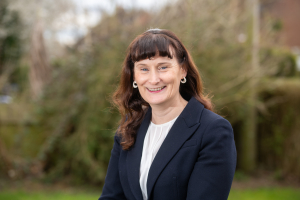
This blog by Cambridgeshire ACRE trustee, Jessica Sellick, examines whether your charitable organisation has the right people around its table; considers where tomorrow’s trustees will come from; and asks you to consider whether you could consider becoming a trustee.
According to the Charity Commission, there are over 170,000 registered charities in England and Wales. About one in nine of the population (11%) volunteers for these charities, and trustees undertake over 900,000 voluntary roles.
At Cambridgeshire ACRE, we have data showing that over 702,000 volunteer hours are contributed annually to village halls across the county. If these volunteers were paid for, it would cost approximately £8.6 million a year, based on the National Living Wage.
Take a moment to reflect on the time, passion, commitment and value you bring to your community. Often, the village hall is the last remaining facility, serving as a vital hub for residents. It’s the simple things in life that often bring us the most joy, like meeting face-to-face and chatting, or participating in activities. The friendships and connections made in community venues are very special and, if you are a committee member, society depends on the work that you and your colleagues do.
How can you ensure your committee is fit for the future? Read on to find out.
Do you currently have the right people at your table, and enough of them?
- What does your committee’s governing document say about how many trustees you need to make decisions, how to recruit them, and how to run meetings? How often do you refer to your governing document, and when did you last review it? Some organisations I have worked with have struggled to locate their governing document, often finding it neglected and gathering dust on a shelf. In contrast, other organisations refer to their governing document regularly, especially when making decisions, planning finances, or submitting reports to funders or regulators.
- Have you got a business plan, and do you have the right skills on your committee to deliver it? I once delivered a workshop for a national funder on the topic of ‘writing a business plan’. Despite the funder’s effort to attract participants with a sign labelled ‘business planning’ (!), attendance was low and I found myself in the corridor coaxing people in. Community groups assume creating a business plan requires extensive time and resources. However, members can work together and develop a plan that meets their needs in 2-3 hours. Everyone left the workshop with a template, and some put a slot in the diary to meet and get their plan drafted before their next board meeting. Your business plan should assist you in telling others about your charity, and support you to manage and deliver your activities.
- Have you carried out a skills audit to identify the strengths and gaps on your committee? An audit highlights the knowledge, skills and experience that members bring to your committee, and identifies areas for further development. It can help you understand how long members want to remain and the contribution they wish to make. From serving on and advising various boards, financial governance consistently ranks high among trustees eager to understand their financial responsibilities. At Cambridgeshire ACRE we know committees often face challenges recruiting people with finance skills to serve as treasurers.
While your governing document, business plan and skills audit can guide you, they can’t always account for the human element. How does your committee operationalise these documents? For example, how does your committee work together to review information and make well-considered decisions? Do all committee members feel safe to suggest, question and challenge ideas or do they avoid difficult topics? I have attended some board meetings where one person dominates the discussion, or where ‘groupthink’ occurs because all the members are drawn from similar backgrounds. However, in most board meetings I’ve attended, all members actively participate, communicate respectfully, and are transparent in their decision making.
Looking ahead, where will your next trustees come from?
In the last year, Cambridgeshire ACRE’s Community Buildings Advice and Support Service handled 269 cases, with half involving governance. We know recruiting and retaining trustees is a significant source of stress for many committees.
This is reflected nationally, with 85% of respondents to a survey by NCVO saying they found it ‘somewhat difficult’ or ‘very difficult’ to fill vacancies on their board. 55% of respondents expect at least one or two trustees to leave their posts in the next 12 months.
- How are you future proofing your committee? Do you have a succession plan – a clear action plan for recruiting future members based on a review of your governing document, the needs of your business plan, and the results of your skills audit?
- Have you produced an inviting and comprehensive role spec for committee members? The spec should clearly summarise the skills you want, promote your ideal candidate, and inform potential members of what is really involved in the role. Committee members often manage both the strategic decisions and some daily operations, so it’s important to be clear on the workload and time commitment required.
- How creative are you in recruiting committee members? The Charity Commission found just 6% of trustees applied for their role via an advert, and more than half of charities relied on personal contacts to recruit new trustees. This recently led them to update their guidance on recruitment and induction practices. What do you already do to advertise vacancies, and is there anything more you can do to advertise the opportunity to a wider pool of candidates? All committee members should actively support the recruitment process by sharing communications about vacancies. Put up posters, use social media, digital platforms, and ask groups using your venue to advertise the role. You may want to hold a short (one-hour) drop-in session in your building or online, or have a stand at local events, to discuss committee membership. In a broader context, when Coniston was looking for a GP, the Parish Council teamed up with residents and local filmmakers to produce a social media campaign to entice a new doctor to their village!
- What does your induction process look like? After recruiting new committee members, how do you onboard them? How do they learn about your work and understand it over time? Can you do more to help them settle in and stay? For example, offer committee shadowing to help them get to know you and the organisation. Do you plan and allow enough time for a handover for the Chair and Treasurer roles? My worst board induction experience was spending 3 hours in a conference room with the chief executive and chair, leaving with 3 lever arch files. While I understood the regulations and legislation, I had no idea how the board operated or the charity worked. My best experience was a board welcome event, where I met all of the board members and key staff, received initial information, saw some activities and met beneficiaries, and was paired with an existing board member who checked in with me before and after each meeting during my first 6 months.
If you’re reading this and not a trustee, is it for you?
Being a trustee means you share ultimate responsibility for governing a charity and directing how it is managed and run. The Charity Commission provides guidance on the responsibilities and eligibility criteria for becoming a trustee. Essentially, if you are 18 years or older and have not been declared bankrupt, do not have an individual voluntary arrangement (IVA) or unspent/certain convictions, you can become a trustee.
At Cambridgeshire ACRE we know people join a community buildings committee for a variety of reasons: to give something back to their local community, to apply their skills, to expand their horizons, deepen their understanding of a local asset, or find a meaningful opportunity as they retire.
Before joining a committee, it’s worth asking yourself a few questions:
- Do I have the time and energy to participate in committee meetings and contribute meaningfully?
- What skills knowledge and experience do I bring – and how does this fit with the current committee?
- What do I hope to learn?
- How does the committee operate, and will I be supported to learn the ropes?
- Where does being a committee member fit into my life?
I would also add, don’t rule yourself out if you don’t meet 100% of the role spec. While some committees may be looking for specific skills, they also need generalists who can contribute across various areas. You might also fill a gap that the committee hasn’t considered, and you definitely offer new ideas and perspectives.
What’s it like being a trustee at Cambridgeshire ACRE?
I work with rural communities across the UK and wanted to use my expertise locally to make a difference. Instead of moving from one project to the next, I wanted to commit to a term of office at a charity where I could stay and have an impact. I applied to join the Cambridgeshire ACRE board after evaluating one of their projects and seeing the positive effect they had in helping people find employment.
I have been a trustee for over three years now. In addition to serving on the main board, I am a member of the finance subcommittee. Our board is diverse, with each trustee bringing different skills, experiences, and perspectives. This includes trustees who support village halls in the county. We have thorough discussions and work together to make decisions in the best interests of the charity.
In practice, some of our work is ‘transactional’, like scrutinising and signing off budgets, accounts, policies, and procedures. Oher times, its ‘thought leadership’, such as working with the team to develop a new strategic plan. While seeing the day-to-day work of the charity and meeting staff, volunteers and beneficiaries is very important, we primarily focus on the charity’s strategic direction, and maintain a ‘nose in, hands out’ approach.
It’s not always easy because there’s so much we’d like to do and we have finite resources. However, many of you joined us earlier this year for Village Halls Week and last year in celebrating our 100th anniversary. I look forward to Cambridgeshire ACRE being here for many more years to come.
Cambridgeshire ACRE is one of 38 county-based organisations dedicated to supporting rural communities across England. We are all members of Action with Communities in Rural England (ACRE). If you are outside of Cambridgeshire, you can find your local organisation here.
And finally…
Having the right people on your committee is essential, but governance and succession planning often get overlooked. In my experience, when a charity struggles, it can be traced back to its governance.
The questions and considerations in this article are not meant to discourage you. Being on a committee is enjoyable too. The best parts? The people you work with and meet and the difference you make (plus, there’s always time for tea and cake!)

