2026 Community Buildings Survey Results
Community buildings are at the heart of communities across Cambridgeshire and Peterborough. Our 2026 survey shows just how much is happening within them, while giving us a clear picture of the challenges facing the volunteers who keep them running. Most importantly, it tells us where Cambridgeshire ACRE can make the greatest difference.
Earlier this year, we invited the people responsible for village halls and other community buildings to tell us about their buildings, committees, finances and future plans, as well as the support they would find most useful.
We received responses from 73 community buildings across Cambridgeshire and Peterborough, including village halls, community centres, church and memorial halls and sports pavilions. We would like to thank everyone who took the time to share their experience with us.
A resilient network of buildings at the heart of community life
One of the clearest messages from the survey is just how much community buildings contribute locally.
64% of respondents described their building as being in good or excellent condition, while 90% considered their building very or reasonably financially sustainable over the next three years.
The activities happening inside these buildings are even more striking. 86% host exercise and fitness activities, 81% social groups or coffee mornings, 63% activities for children and families, 60% activities for older people and 58% arts and cultural activities. More than half of respondents also said their building hosts a public or statutory service.
And committees are not standing still. Respondents told us about plans ranging from refurbishment and new facilities to accessibility improvements and renewable energy projects.
All of this reinforces something we see through our work every day: community buildings are about much more than providing rooms for hire. They provide places where people can meet, exercise, learn, access services and take part in community life.
Supporting the volunteers who keep buildings running
Alongside that positive picture, the survey identified one challenge particularly clearly: finding the people needed to run community buildings.
Recruiting trustees was the most frequently reported difficulty, identified by 59% of respondents. More significantly, 69% of those answering said they were not very confident or not at all confident that their committee could replace key volunteers or trustees over the next three years. Written responses particularly highlighted roles such as Chair, Treasurer, Secretary and bookings officer.
That has an important implication for us. Helping community buildings remain sustainable is not just about the bricks and mortar. It is also about supporting the people responsible for them.
We therefore plan to put greater emphasis on succession planning and committee resilience, with practical resources covering role-sharing, recruitment, handovers and ways of spreading responsibilities between more people. We also want to share examples of how other committees have successfully managed succession.
Helping committees look after their buildings
Building repairs were among committees’ highest priorities for the coming year, while 37% said building maintenance caused difficulties. Although most buildings were considered to be in reasonable condition, respondents mentioned issues ranging from roofs and heating systems to structural problems and the challenges of maintaining older buildings.
Money is inevitably part of the picture. 68% of those answering about planned improvements identified funding as their greatest barrier to delivering them. But the survey also highlighted volunteer capacity, technical expertise and planning or building regulation issues.
This tells us that pointing committees towards a grant is not always enough.
We want to provide more support to help committees take a project from an initial idea through to delivery. That means helping them understand what they are trying to achieve, explore their options, identify when specialist advice is required and get projects ready for funding.
We will also strengthen our support around planned maintenance, helping committees think about future repairs alongside reserves and fundraising rather than treating each as a separate issue.
Tackling energy costs and improving buildings
Energy remains an important issue. 56% of respondents had experienced financial pressure from energy costs during the previous two years, while just over two-thirds were quite or very concerned about future energy costs.
But buildings are already taking action. During the previous 12 months, respondents reported installing measures including LED lighting, battery storage, solar PV, heating controls and insulation.
The survey also tells us that committees want practical help. 40% selected support with reducing energy consumption through low-cost measures, ahead of more complex areas such as renewable technologies or net zero planning.
Our response will therefore continue to focus on helping committees understand their building and energy use first, identify practical improvements and make informed decisions about larger investments where appropriate.
Helping buildings reach more people
There was another encouraging finding: 80% of respondents felt that their building fully or mostly reflected the needs of their community. Yet increasing use was also one of committees’ three most frequently selected priorities for the coming year.
Committees told us they would particularly like to engage groups including children and young families, teenagers and young adults, working-age residents, older people and people at risk of isolation.
We want to help committees think beyond simply marketing their hall. That means understanding who is already using the building, identifying gaps, talking to residents and developing relationships with local organisations and service providers which could bring new activities into community spaces.
Making support easier for busy volunteers to access
The survey also gave us a very practical steer about how people want to receive support.
66% wanted online training, 55% downloadable templates and guides and 44% short video tutorials. At the same time, personal advice remains important, with respondents also selecting email support, in-person training and one-to-one advice.
The challenge is time. 70% said lack of time or volunteer capacity made it difficult to attend training or support sessions.
Our response will therefore be to make support more flexible, rather than simply offering more of it. We plan to combine concise online sessions and practical downloadable resources with recordings, short videos, opportunities to learn from other committees and one-to-one support for more complicated issues.
Building on what works
The survey also gave us useful feedback about our existing community buildings service.
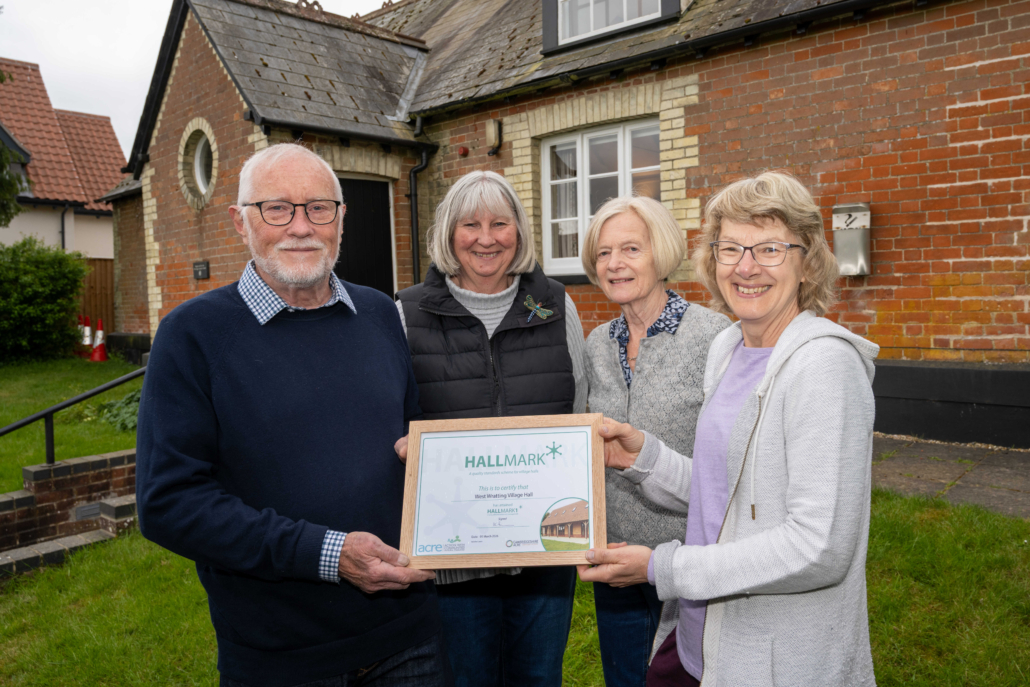
Email advice was our most widely used service among respondents, followed by training events, while written comments particularly valued responsive advice, funding guidance, energy audits and sustainability advice, Hallmark support, governance guidance, forums and regular updates.
And 88% of respondents said they were likely or very likely to recommend Cambridgeshire ACRE membership to another community building, with nobody selecting either of the unlikely options.
We are pleased to see that goodwill, but we are not going to take it for granted. The results suggest that we should concentrate on strengthening and making better use of the support that committees already value, rather than simply creating more services.
What happens next?
This survey was designed to help us improve what we do.
In response to what community building committees have told us, we will focus particularly on:
- volunteer succession, with practical help around recruitment, role-sharing and handovers;
- maintenance and financial planning, helping committees connect future repairs with reserves and fundraising;
- building and energy projects, helping committees move confidently from an idea towards a deliverable and fundable project;
- practical training and resources, including online learning, templates, recordings and short videos;
- community use, helping buildings understand who they currently reach and opportunities to involve more of their community;
- peer learning, sharing practical experiences and ideas between community building committees; and
- continued one-to-one advice for the more complicated issues where a template or training session cannot provide the whole answer.
The survey was voluntary and almost half the responses came from South Cambridgeshire, so the findings should not be taken as representing every community building across Cambridgeshire and Peterborough. They do, however, give us a valuable evidence base for shaping our support and working with partners.
Thank you to everyone who contributed. Your responses have given us a clear picture of what is working, where the pressures are and, most importantly, where Cambridgeshire ACRE can provide practical support to help community buildings continue to thrive.

